As an International Dentist, there are numerous opportunities to begin your dental career in the USA. Navigating the best path can be challenging, but I hope the information provided here will offer you a clearer understanding of the available trajectories. While there are various avenues to explore, the ones discussed are the most common ways for international dentists to engage with the community.
The accompanying diagram outlines different pathways to obtain licensure and work in the USA, including options for dentists with various visa situations.
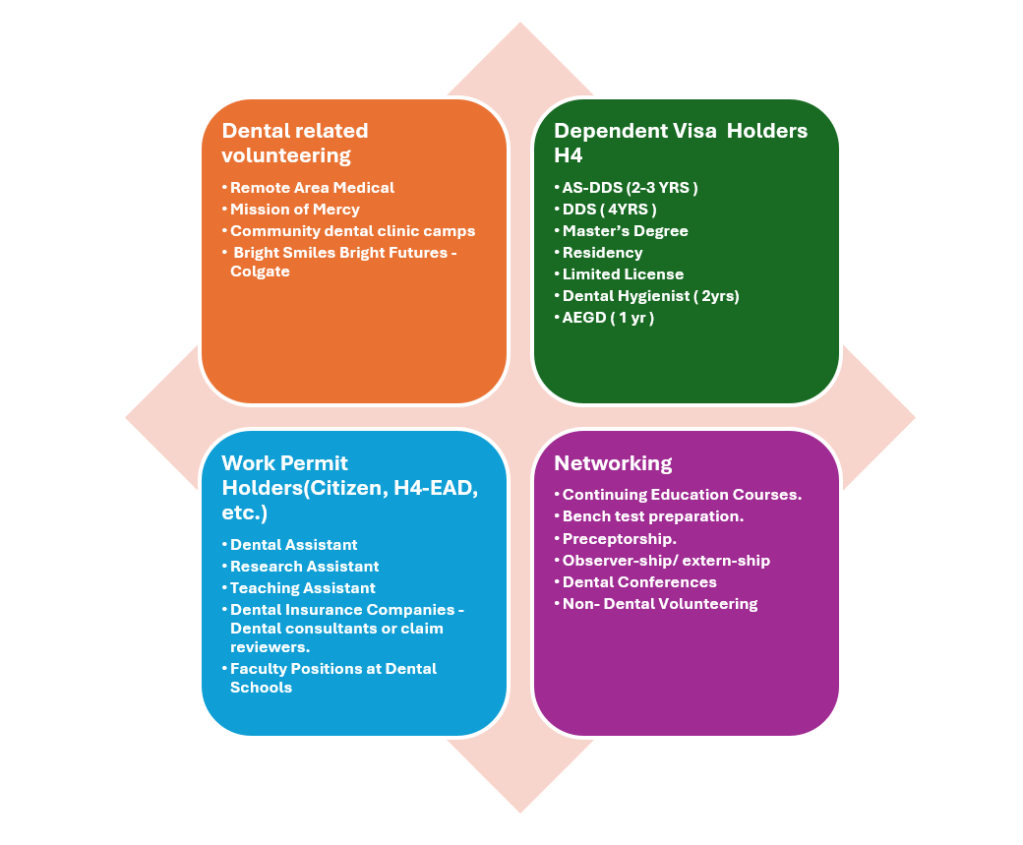
For Those With Work Permits
International dentists with valid work permits ( Citizens / other visa holders who can work ) have several opportunities to engage with the dental community during the period of acceptance to dental school:
- Dental Assistant: Gain direct patient interaction, enhancing your understanding of U.S. dental practices and improving communication skills.
- Research Assistant: Contribute to dental research projects at universities or private institutions.
- Teaching Assistant: Participate in academic settings, potentially within dental schools.
- Dental Consultant: Provide expertise to dental companies or insurance providers.
These roles offer valuable experience and help you acclimate to the U.S. healthcare system and professional culture.
For Those Without Work Permits
For those without work permits ( Non-citizens/Dependent on Immigrant workers ), here are educational and professional pathways to consider:
- Advanced Standing Programs(AS-DDS) (2-3 Years): This program is designed for internationally trained dentists to gain a U.S. dental degree, allowing them to practice in the United States. It typically involves completing the last two to three years of a traditional DDS program.
- Doctor of Dental Surgery (DDS) (4 Years): A comprehensive program that provides foundational knowledge and clinical skills in dentistry. It is the standard path for entering the dental profession in the U.S.
- Master’s Degree: Pursuing a master’s in a dental-related field, such as public health or dental sciences, can enhance your expertise and open up academic or research opportunities.
- Residency (2-3 Years): Specialized training programs in areas like orthodontics, periodontics, or oral surgery. These programs provide advanced clinical experience and often lead to board certification in a specialty.
- Limited License: Some states offer limited licenses to practice dentistry in specific settings, such as educational institutions or public health clinics, under certain conditions. States that offer limited dental licenses include : Minnesota, Massachusetts, Ohio, South Dakota, and Vermont.
- Dental Hygienist (2 Years): Completing a dental hygiene program allows you to work in preventive oral healthcare, focusing on scaling and educating patients about oral hygiene.
- Advanced Education in General Dentistry (AEGD) (1 -2 Years): A postgraduate program that provides advanced training in general dentistry, enhancing clinical skills and knowledge.
These options offer valuable pathways to integrate into the U.S. dental field, even without a work permit.
Building Your Professional Profile
Even without a work permit, you can stay connected to the field and enhance your knowledge and profile through these activities during the period of acceptance to dental school:
- Dental-Related Volunteering: Offer your skills to community health initiatives, such as free dental clinics or health fairs, to gain hands-on experience and contribute to public health.
- Preceptorship: Observe and learn from experienced dentists in a clinical setting. Although you cannot perform procedures, this experience provides valuable insights into U.S. dental practices.
- Continuing Education: Enroll in online courses, workshops, or seminars to keep your dental knowledge current and learn about the latest advancements in U.S. dentistry.
- Networking: Attend dental conferences, webinars, and join professional associations. Networking helps you build connections with other dental professionals and stay informed about the industry.
- Research Collaboration: Participate in dental research projects remotely. Contributing to studies or writing papers can enhance your understanding of cutting-edge dental topics.
- Non-Dental Volunteering: Engage in general community service projects. This involvement can improve your language skills, cultural understanding, and demonstrate your commitment to societal contributions.
These activities help maintain your connection to the dental field and strengthen your professional profile.
By taking advantage of these opportunities, international dentists can effectively integrate into the U.S. dental profession. Whether you’re aiming for immediate employment or focusing on long-term career development, staying engaged in the field is essential. This comprehensive approach not only enhances your profile but also helps build valuable connections and insights, setting you up for success in the competitive U.S. dental environment. Remember, each path comes with its own set of challenges and rewards. Consider your personal goals, visa status, and future plans to determine the best course for your dental career in the USA.
The opportunities shared here are some of the most common and widely followed approaches. By exploring untapped areas, staying innovative, and focusing on emerging trends, we can unlock new possibilities that align with evolving needs. The key lies in adopting fresh perspectives and seeking solutions beyond conventional approaches.
Note: Every state and dental school in the U.S. may have unique prerequisites and expectations for international students. By thoroughly researching and understanding these requirements, you can strategically enhance your application to align with each school’s expectations. Opportunities mentioned here are few common ones that has been followed, but there are more that can be utilized as well.


 Dr.Yoga's Journal
Leave a comment